









Yangiliklar
Mahsulotlar bo‘yicha tezkor navigatsiya
Tijoriy taklif olish
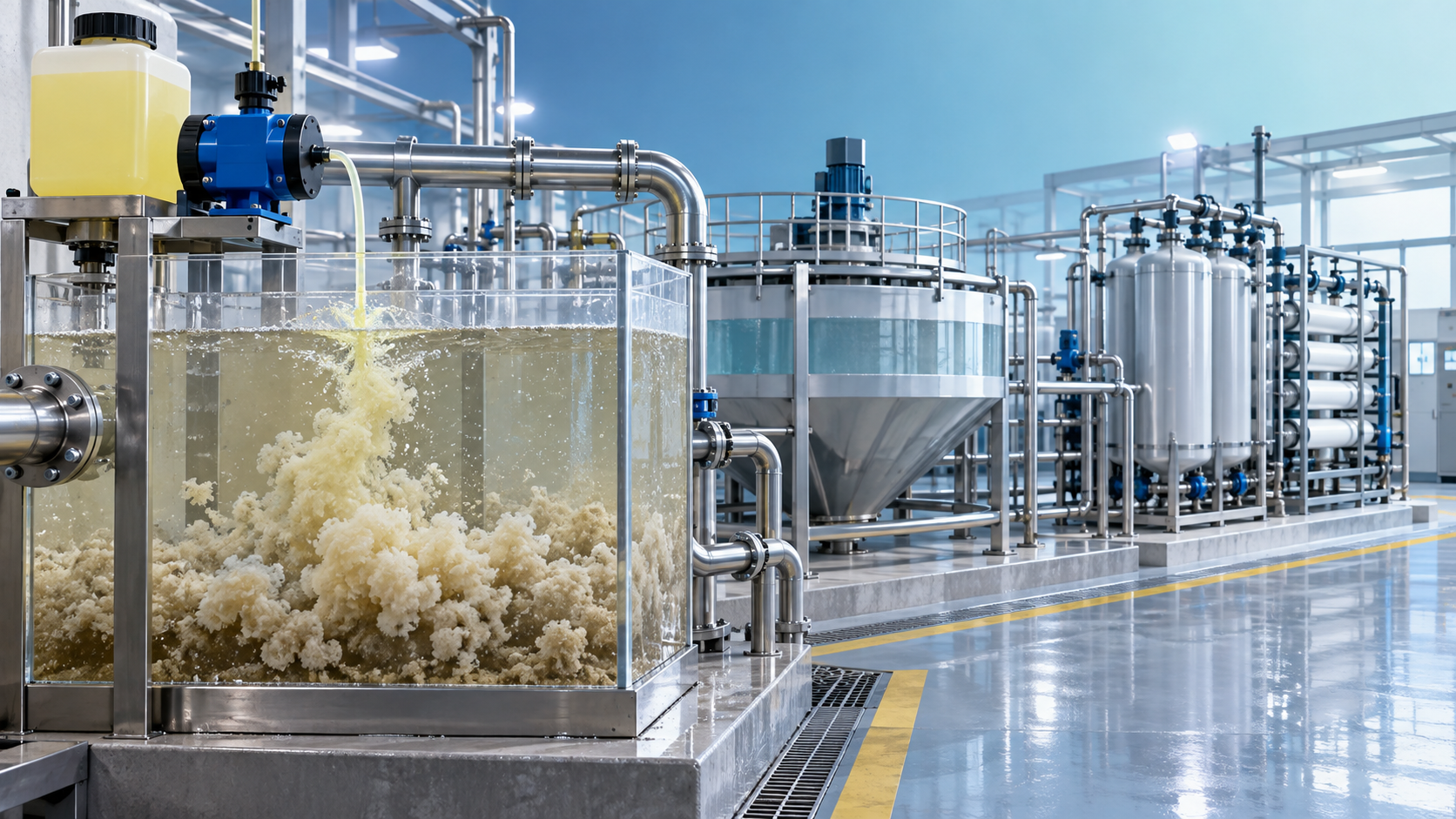
Why is my water treatment coagulant dosage increasing? In most cases, the increase reflects a change in water conditions, treatment chemistry, equipment performance, or product consistency.
For industrial operators, dosage growth should be treated as an operational signal rather than a simple purchasing issue. Higher consumption can raise costs and threaten treated-water compliance.
The right response is not automatically adding more chemical. It is comparing current process data with historical conditions, then confirming the true cause through structured testing.
What Does Increasing Coagulant Dosage Usually Mean?
Coagulants destabilize suspended particles, colloids, color-causing organics, and some dissolved contaminants. Common products include polyaluminum chloride, aluminum sulfate, ferric chloride, and polymeric iron salts.
When dosage rises, the incoming water may contain more particles or a different contaminant profile. However, the problem can also originate after the chemical arrives onsite.
Plant teams often notice the issue through increased daily consumption, declining settled-water clarity, higher sludge production, or more frequent operator adjustments during normal treatment shifts.
A dosage increase is acceptable when raw-water loading genuinely increases and treated-water quality remains stable. It becomes concerning when consumption rises without reliable performance improvement.
The central question is whether more coagulant is compensating for a temporary water-quality event, a controllable process weakness, or inconsistent chemical product quality.
Historical operating records provide the starting point. Compare dosage against raw-water turbidity, pH, alkalinity, temperature, flow rate, color, conductivity, and final-water quality.
One isolated high-dose day rarely proves a trend. A sustained increase across comparable operating conditions deserves investigation because it can affect budgets, sludge handling, and compliance risk.
Operators should also distinguish between product volume and active dosage. Different product concentrations, densities, and active ingredient contents can make consumption figures misleading.
For example, a lower-concentration liquid coagulant may require more liters per cubic meter while delivering the same active chemical dosage as the previous product.
Has the Raw Water Quality Changed?
Raw-water variation is the most common explanation for increased coagulant demand. Seasonal weather, upstream discharge, source-water changes, and industrial activity can alter treatment conditions quickly.
Heavy rain can introduce silt, clay, organic matter, microorganisms, and runoff contaminants. These materials create more negatively charged particles requiring additional coagulant for effective destabilization.
Higher turbidity often increases dosage, but turbidity alone does not tell the whole story. Fine colloidal particles can be difficult to remove even at moderate measured turbidity.
Natural organic matter is another important driver. Humic substances, algae, decaying vegetation, and color-causing compounds may consume coagulant and interfere with floc formation.
Industrial wastewater sources can change without obvious visual warning. A new production batch, cleaning cycle, solvent residue, surfactant, oil, or metal-bearing stream may alter coagulant demand.
Source blending also matters. Combining groundwater, surface water, reclaimed water, or different wastewater streams can create chemical interactions that were absent under previous operating conditions.
Temperature changes can slow coagulation and flocculation. Cold water generally increases viscosity, reduces particle collision efficiency, and may require revised mixing conditions or somewhat higher dosage.
Conductivity and ionic strength can affect particle stability. In certain wastewater applications, changes in dissolved salts may alter the charge-neutralization behavior of aluminum- or iron-based coagulants.
Routine sampling should therefore include more than turbidity. Track pH, alkalinity, color, COD or TOC where relevant, temperature, suspended solids, and site-specific contaminants.
Could pH and Alkalinity Be Driving Higher Demand?
pH is one of the most important variables in coagulation. Aluminum- and iron-based coagulants work within practical pH ranges that vary by product, water matrix, and target contaminant.
If raw-water pH drifts outside the preferred range, the same coagulant may produce weaker charge neutralization, smaller flocs, slower settling, and increased residual metals.
Alkalinity is equally important because many inorganic coagulants consume alkalinity during hydrolysis. Insufficient alkalinity can cause pH depression and limit effective floc formation.
A plant may respond by increasing coagulant dosage, yet that additional coagulant can further reduce pH. This creates a costly cycle with little improvement in clarification.
Check whether neutralizing chemicals, lime, sodium hydroxide, sodium bicarbonate, or acid dosing have changed. A calibration issue or upstream control adjustment can shift coagulation chemistry substantially.
Jar testing should evaluate coagulant dosage alongside pH correction. Testing dosage alone can identify a temporary optimum, but it may miss a lower-cost operating window.
For surface water treatment, a small pH adjustment may improve floc quality enough to reduce coagulant use. The result depends on source-water composition and selected chemistry.
For industrial wastewater, the appropriate pH range can be narrower. Metal precipitation, emulsion breaking, phosphorus removal, and color reduction may each require different chemical conditions.
Document pH before dosing, after rapid mixing, after flocculation, and at discharge. These data help determine whether higher dosage is solving the problem or masking instability.
Are Mixing, Flocculation, and Separation Equipment Still Performing Correctly?
Even a suitable coagulant cannot compensate fully for poor physical treatment conditions. Chemical performance depends on accurate dosing, rapid mixing, controlled flocculation, and effective solids separation.
Rapid mixing disperses coagulant quickly through the water. Weak mixing can leave zones with inadequate chemical contact, while excessive mixing may disrupt early particle aggregation.
Flocculation requires gentler energy over sufficient time. Damaged paddles, incorrect mixer speeds, short-circuiting, or changed flow patterns can produce fragile flocs that settle poorly.
Clarifiers, dissolved air flotation units, lamella separators, and filters require inspection. Hydraulic overload, sludge blanket instability, fouled plates, and worn components can reduce removal efficiency.
A rising coagulant dose may be an operator response to equipment decline. In that situation, chemical spending increases while the underlying hydraulic or mechanical problem remains unresolved.
Metering pumps deserve special attention. Worn diaphragms, blocked suction lines, air entrainment, leaking check valves, and inaccurate stroke settings can cause inconsistent actual dosing.
Verify pump output with a timed calibration test rather than relying only on the displayed setting. Compare delivered volume, solution concentration, and flow-paced control signals.
Chemical dilution systems can also create errors. Excessive dilution water, poor solution mixing, or an incorrect stock concentration can make apparent dosage changes difficult to interpret.
Before changing suppliers or increasing purchase volumes, confirm that the plant is actually receiving and applying the intended active amount of coagulant at the correct injection point.
Could the Coagulant Product or Storage Conditions Have Changed?
Product quality and active content are legitimate causes of higher consumption, particularly when a plant has changed suppliers, grades, packaging formats, or delivery routes.
For liquid coagulants, confirm density, concentration, basicity where relevant, insoluble matter, pH, and active component specifications. These values should match the agreed technical data sheet.
For solid products, verify dissolution quality, moisture exposure, particle size, storage time, and preparation procedures. Incomplete dissolution can reduce available active chemical and block dosing equipment.
Batch-to-batch consistency matters because water treatment plants are tuned to predictable behavior. Small formulation differences can affect optimum dose, floc size, settling rate, and sludge characteristics.
Storage conditions can degrade practical performance. Contamination, prolonged storage, unsuitable temperatures, crystallization, and incompatible tank materials may affect liquid chemical handling or concentration uniformity.
Sample retained material from current and previous deliveries when possible. Independent laboratory analysis and comparative jar tests provide stronger evidence than appearance or supplier assumptions alone.
Procurement teams should avoid comparing products only by price per ton. The more meaningful metric is cost per cubic meter treated at the required water-quality outcome.
A cheaper product with lower active content or weaker performance can increase freight, storage, pumping, sludge disposal, labor, and compliance costs. Unit price is not total treatment cost.
Reliable suppliers should provide clear specifications, certificates of analysis, traceability, stable export documentation, and responsive technical support when a plant experiences an unexpected dosage shift.
How Can Jar Tests Identify the Real Cause?
Jar testing is the most practical way to determine whether rising dosage is driven by water quality, chemical performance, pH conditions, or treatment objectives.
Use a representative raw-water sample collected during the period of increased consumption. Record sampling time, temperature, source blend, flow condition, and relevant upstream process changes.
Test a dosage range that includes the historical operating point and higher levels. Include pH-adjusted samples where alkalinity or pH instability may be influencing results.
Maintain consistent rapid-mix speed, flocculation time, settling time, and test temperature. Inconsistent testing conditions can produce conclusions that do not translate to full-scale operation.
Evaluate more than visual clarity. Measure settled turbidity, color, residual aluminum or iron where applicable, pH, sludge volume, filtration behavior, and target pollutant removal.
Test the current product against a retained approved batch or alternative qualified product. A side-by-side comparison can reveal whether performance has changed at equivalent active dosage.
Observe floc formation carefully. Strong treatment typically produces visible, coherent flocs that separate predictably, while weak treatment may create pin floc, floating solids, or cloudy supernatant.
The best dosage is not always the lowest dose producing acceptable turbidity. It should also account for sludge generation, downstream filtration, chemical cost, and operational stability.
Repeat tests when raw-water conditions change materially. A quarterly optimization program may be adequate for stable sources, while variable industrial streams may need frequent monitoring.
What Operational Data Should Be Reviewed First?
Start with a short period of comparable historical data, such as the previous month, season, or production cycle. Avoid comparing unrelated weather conditions or source-water blends.
Review raw-water flow, coagulant dose, product concentration, pH, alkalinity, turbidity, temperature, settled-water turbidity, filter performance, sludge volume, and discharge quality together.
Calculate active chemical consumption per cubic meter treated. This normalizes changing production volume and distinguishes genuine dosage escalation from simply treating more water overall.
Plotting data often exposes patterns that individual shift logs hide. Dosage may rise only during rain events, night shifts, certain production batches, or specific source-water transfers.
Check changes outside the treatment department. Upstream manufacturing decisions, maintenance work, raw-material substitutions, cleaning procedures, and wastewater segregation failures can affect influent treatability.
Alarm and calibration histories are useful evidence. A failed pH probe, turbidity analyzer drift, or flowmeter error can cause automated dosing systems to overfeed coagulant.
Operators should record practical observations as well as instrument data. Changes in water odor, foam, color, floc texture, clarifier behavior, or sludge dewatering can guide investigation.
Set action thresholds before a major increase occurs. For example, a sustained active-dose increase beyond a defined percentage can automatically trigger sampling, jar tests, and equipment checks.
This disciplined approach prevents reactive purchasing decisions. It also gives management reliable evidence when evaluating capital improvements, supplier performance, or revised chemical treatment strategies.
How Can Plants Reduce Coagulant Cost Without Increasing Risk?
Reducing coagulant cost begins with stable treatment, not aggressive chemical cuts. Underfeeding can cause poor clarification, filter fouling, compliance failures, and higher downstream operating costs.
Optimize the treatment train as a system. Correct pH control, effective mixing, appropriate polymer use, reliable clarification, and stable influent management often reduce coagulant requirements together.
Polymer aids may improve floc size and settling when properly selected. However, they must be optimized through testing because excess polymer can worsen turbidity or filtration performance.
Consider staged dosing for challenging water. Splitting coagulant addition across suitable points may improve contact and distribution, particularly where raw-water quality varies rapidly.
Improve raw-water equalization where possible. Blending variable wastewater streams in a controlled tank can reduce shock loads and give operators time to adjust treatment chemistry intelligently.
Maintain accurate chemical inventory records. Unexpected consumption is easier to detect when delivery quantities, tank levels, pump calibration, and daily treatment volume are reconciled consistently.
Supplier qualification should include more than a product sample. Review manufacturing capability, quality control, export packaging, logistics planning, compliance documentation, and response procedures for disruptions.
For overseas buyers, supply reliability matters because treatment interruptions can be expensive. Consistent specifications and dependable shipment coordination support stable dosage control at the plant.
Huafeng Chemical supports international chemical customers through product portfolio coordination, export service capabilities, technical documentation, and supply-chain responsiveness for qualified water treatment applications.
Conclusion: Treat Rising Dosage as a Diagnostic Signal
Why is my water treatment coagulant dosage increasing? The answer is usually found in changing raw-water characteristics, pH and alkalinity conditions, equipment performance, or chemical quality.
Do not assume that purchasing more coagulant is the final solution. First verify active dosage, compare operating data, inspect equipment, and conduct controlled jar testing.
A structured investigation can reveal opportunities to restore treatment efficiency, reduce chemical waste, control sludge costs, and protect water-quality compliance before the problem becomes persistent.
The most reliable plants treat coagulant consumption as a measurable process indicator. By combining sound data, routine testing, and dependable chemical supply, they make better operating decisions.
Bugun bizga so‘rovingizni yuboring